
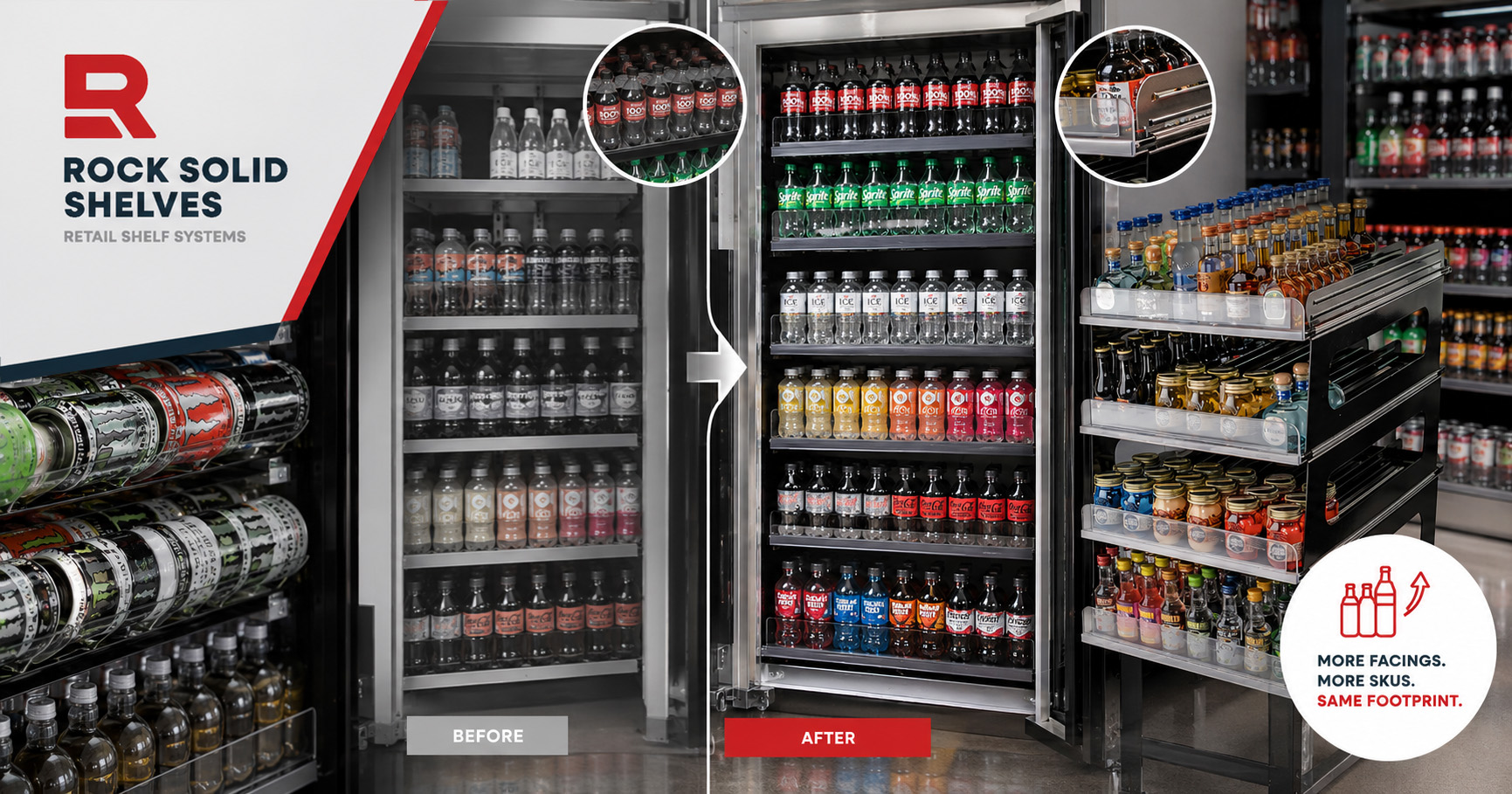
Adding cooler capacity is expensive. A new door, a new refrigeration unit, or an expanded cooler room requires capital investment, construction time, and ongoing energy costs. Most convenience store operators looking to carry more SKUs or increase the product density of their cooler program do not have budget or floor space for physical expansion.
The alternative is to get more from the cooler space that already exists. In most stores, existing cooler capacity is underutilized because the shelving system is not optimized for density, depth, or multi-tier efficiency. Smarter shelving configuration typically unlocks significantly more SKUs and facings within the same refrigerated footprint.
Why Most Coolers Are Running Below Capacity
Dead Space at the Back of Shelves
On a static cooler shelf, the product placed at the rear is essentially invisible and inaccessible to shoppers without reaching deep into the cooler. Stores compensate by not stocking to full depth, leaving the rear portion of the shelf either empty or holding overflow that does not contribute to active facings.
Gravity feed shelving eliminates this waste by continuously moving product from the rear to the front. The full depth of the shelf becomes active selling space. Every unit loaded on a FlexRoller gravity feed system contributes a facing.
Underused Vertical Space
Most cooler racks are configured with shelf spacing determined by the tallest product in the section rather than optimized for the actual product mix. This leaves significant vertical space unused in sections where products are shorter than the shelf gap allows.
Multi-tier display systems like the FlexRoller 4-tier display allow the same vertical space to accommodate multiple product rows, effectively multiplying the number of facings available within a single shelf opening.
Wide Lanes That Only Hold One SKU
In sections where lanes were configured for a specific product that has since changed, remaining lane widths may be wider than necessary for current SKUs. This wastes horizontal space and reduces the total number of facings that can fit in the section.
FlexRoller wire dividers allow lane widths to be matched to current product dimensions, recovering horizontal space and adding additional facings without any physical cooler modification.
Strategies to Maximize Cooler Space
1. Use Full Shelf Depth with Rear Loading
Switching to gravity-maximizing feed shelving activates the front-to-back depth of every shelf. Where a static shelf might functionally use 60 to 70 percent of its depth before product becomes inaccessible to shoppers, a gravity feed system makes 100 percent of the shelf depth active. This alone can increase the number of units each shelf holds without changing shelf dimensions.
2. Add Tiers in Sections with Short Products
Sections holding canned beverages, energy drink cans, or small packaged items often have shelf gaps that are significantly larger than the product height requires. Installing a second or third tier within the existing shelf opening allows the same vertical space to hold two or three rows of product, rather than just one.
The FlexRoller 2-tier display is designed for exactly this scenario and can double can-facing capacity in a section without modifying the cooler infrastructure.
3. Narrow Lanes to Match SKU Width
Audit your current lane widths against your actual product planogram. In any section where lanes are wider than the products they hold, adjustable dividers can narrow those lanes and recover space for additional SKUs or additional facings of high-velocity items. This is a no-cost optimization that many stores have available without purchasing any new equipment.
4. Relocate Slow-Movers Out of Prime Cooler Space
Not every product needs refrigerated display space. Some items that have historically occupied cooler shelves may have low velocity and could be moved to ambient shelving without affecting sales. Freeing cooler space from slow-moving product allows higher-margin, faster-turning SKUs to expand their facings.
5. Optimize the Transition Space Between Door Panels
In multi-door cooler setups, the vertical structural elements between door panels create dead zones where product cannot be placed. Configuring shelves to run flush with the edge of each door opening rather than recessing from the panel maximizes the usable width of each door section.
6. Use Shelf Management Systems for Ambient Categories
For categories adjacent to the cooler, such as snacks, confectionery, and health and beauty, placed near the cooler entrance, the ProPusher shelf management system keeps these sections organized and front-facing with the same efficiency as the cooler program.
The Impact of Space Optimization on SKU Count and Revenue
A convenience store cooler that runs optimized shelving configurations typically supports 15 to 25 percent more facings within the same physical footprint compared to a standard static shelving setup. For a store carrying 300 cooler SKUs, that could mean 45 to 75 additional facings available without spending a dollar on new refrigeration.
More facings mean more products visible to shoppers, more opportunity for incremental purchases, and a more competitive product selection that keeps shoppers returning rather than going elsewhere for variety.
Rock Solid Shelves offers FlexRoller configurations and accessories suited to every cooler format and category mix. Visit shop all systems to explore the full range, or contact the team for a customized space optimization plan.
| Get More From the Cooler Space You Already Have Book a Cooler Optimization Demo |
Frequently Asked Questions
Can I add more products to my cooler without buying new refrigeration equipment?
Yes. Optimizing shelf configurations using gravity feed systems, multi-tier displays, and adjustable lane dividers typically increases usable facings by 15 to 25 percent within an existing cooler footprint.
How does gravity feed shelving increase cooler capacity?
Gravity-feed shelving utilizes the full front-to-back depth of each shelf. On a static shelf, the rear depth is effectively dead space because shoppers cannot easily reach products stored there. On a gravity-feed shelf, all loaded units contribute active facings because they move to the front as product is sold.
What is the easiest first step to maximize cooler space?
Audit current lane widths against actual product dimensions. In most stores, several lanes are wider than necessary for current SKUs. Adjusting those widths with wire dividers is a quick, low-cost way to recover space for additional facings.
Are multi-tier display systems compatible with existing cooler racks?
Yes. FlexRoller 2-tier and 4-tier display configurations are designed to fit within standard cooler rack shelf openings. They do not require modification to cooler frames or refrigeration units.
How much can a cooler space optimization project increase revenue?
Increasing available facings by 15 to 25 percent within the existing cooler footprint directly expands the product selection visible to shoppers, which drives higher impulse purchase rates and overall cooler revenue.