Key Takeaways
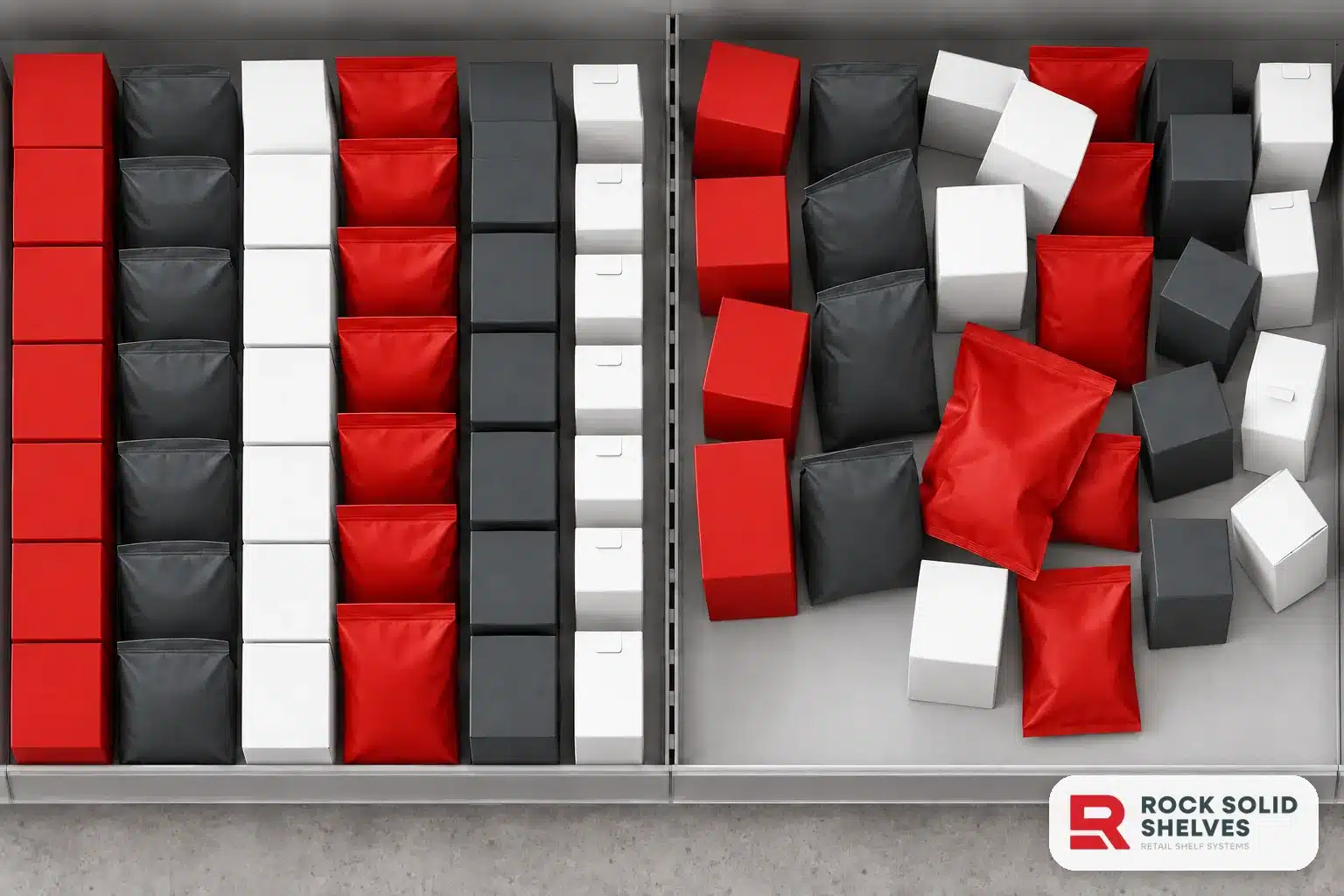
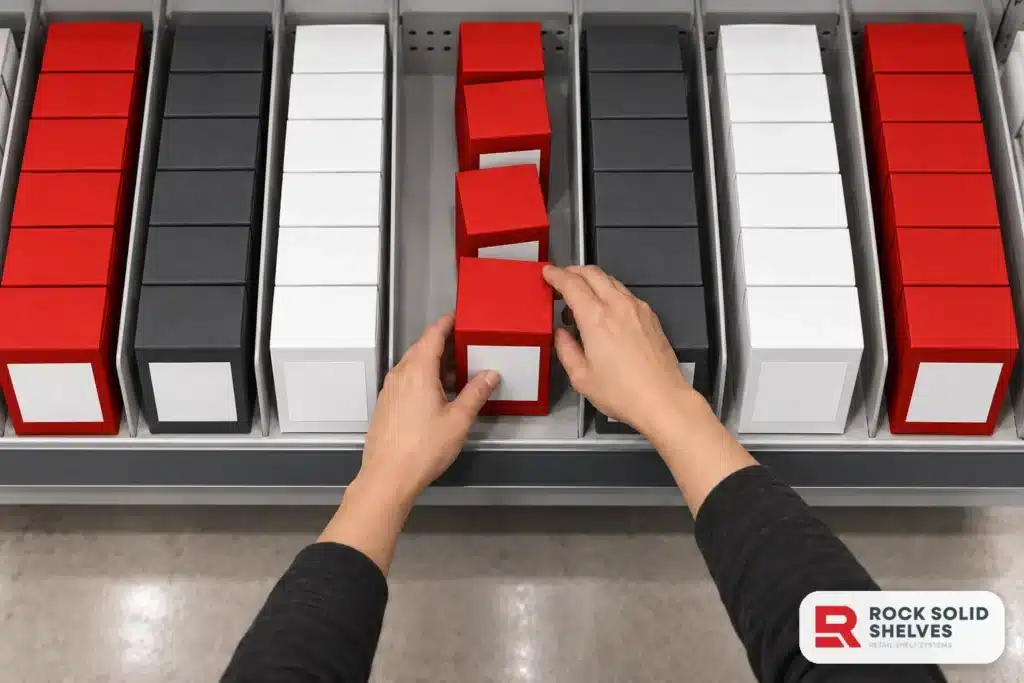
- Facing means pulling the product to the front edge of the shelf with the label out. “Facings” also means something else: how many units of a product are visible on the front.
- A faced shelf sells better because the front row is all a shopper really sees. A gap at the front reads as out of stock, even with plenty behind it.
- Facing never stays done. The average US convenience store handles about 1,484 transactions a day (NACS, 2025 data), and each one can disrupt a row.
- The cost is labor, and it repeats every shift. A few minutes per section, several times a day, across a whole store adds up to real hours.
- The lasting fix is to make shelves face themselves. Use pushers on flat shelves, gravity-feed in coolers, and dividers everywhere, and keep hands-on time for zoning and restocking.
The aisle looked perfect at 9 am. Every box was pulled to the edge, every label square.
By lunch, it looks picked over. Nothing has sold out, and there’s stock in every lane. It’s just sitting a few inches back, turned at angles, with gaps along the front where the first units used to be.
So someone faces it again. And again before the evening rush. Ask the people who do this job, and plenty will tell you it feels like pointless busywork. They’re half right. The work matters, but doing it by hand all day is a losing game.
What does facing mean in retail?
Facing a shelf means pulling each product forward to the front edge and turning it so the label faces the shopper. The shelf ends up looking full and orderly, even if there are only a few units in each lane.
You’ll hear a few related terms, and stores use them loosely.
Fronting usually means the same thing: pulling the product forward. Some stores use “fronting” for pulling forward and “facing” for turning labels out, but most treat them as one job.
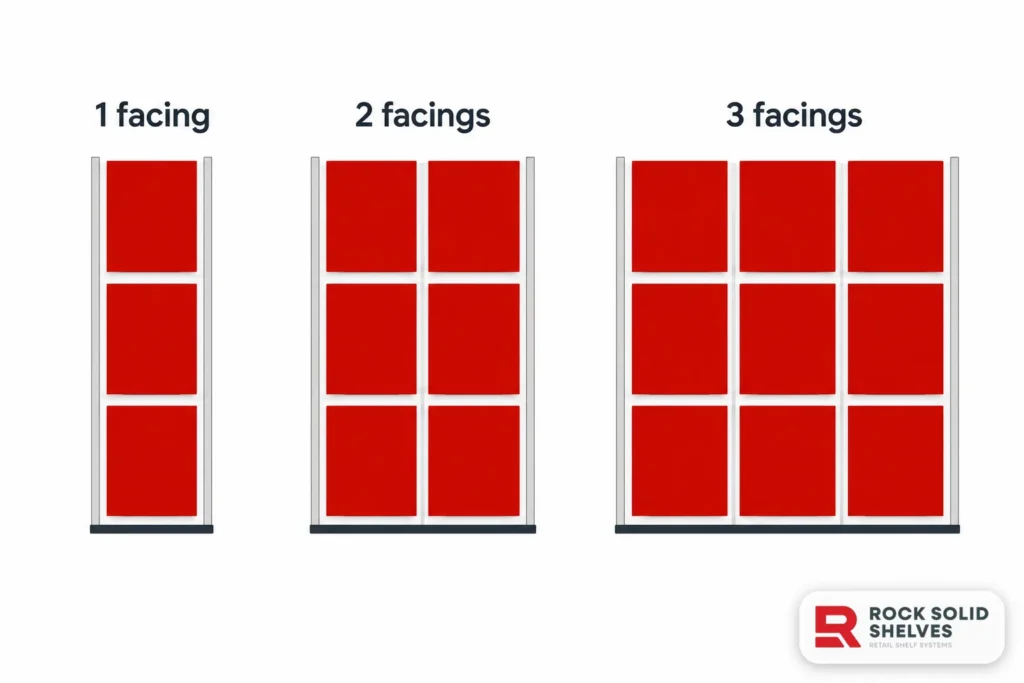
Facings, as a count, means something different. It’s how many units of a product show side by side across the front of the shelf. A product with three facings takes up three units of width.
Zoning is the bigger version: straightening a whole section or aisle, usually at the end of the day, so the store opens clean.
Why a faced shelf sells better
A shopper standing in the aisle sees the front row. That’s the whole shelf as far as they’re concerned.
If the front of a lane is empty, the product looks sold out. Most shoppers won’t lean in to check whether there’s stock pushed back behind the gap. Around 49 percent of convenience store shoppers are what NACS calls Time Optimizers, people whose main goal is getting in and out fast. They pick from what’s in front of them.
It matters most in the categories people don’t plan to buy. NACS shopper research puts unplanned purchases at 62 percent for salty snacks. If the shelf is what makes the sale, a shelf that looks empty loses it, and no one ever knows it happened.
Why does facing never stay done?
A faced shelf starts coming apart with the first customer.
People take from the front, then the next unit sits one space back. Some reach past the front to grab one from behind. Others pick something up, change their mind, and put it back at an angle. Light packaging like pouches and small boxes slumps or tips once the unit beside it is gone.
Multiply that by traffic. The average US convenience store handled 45,160 transactions a month in 2025, about 1,484 a day (NACS). Every one of those is a chance for a row to drift.
That’s why facing feels endless to the people doing it. They aren’t doing it badly. The shelf undoes their work all day.
What does facing by hand really cost?
There’s no reliable industry figure for time spent facing, so here’s an illustrative example you can redo with your own numbers.
Say a store has 12 shelf sections that need regular facing. Each takes about 3 minutes and is faced 3 times a day. That’s 108 minutes a day, or 1.8 hours.
At the 2025 average store-level wage of $15.04 an hour (NACS), that’s about $27 a day. Over a year, it’s close to $9,900 spent pulling product forward in one store.
Your numbers will be different. Some stores face more often, some less, and some sections take far longer than three minutes. But the shape of the cost holds: it’s small per visit, it happens every day, and it never ends. That’s the kind of cost worth engineering out.
How many facings should a product get?
Enough that it doesn’t sell out between restocks, and not so many that slower items get squeezed off the shelf.
Fast sellers need more facings. A product with one facing looks sold out the moment a few units go, even if its lane is deep. Two or three facings keep it visible through a busy day.
Depth matters less than most stores assume. A lane six units deep with one facing shows one product. The same stock spread across two facings, three deep, shows it twice as wide and looks fuller for longer. There’s more on that trade-off in our guide to snack and confectionery merchandising.
How to make shelves face themselves
If the problem is that shelves undo the work all day, the fix is shelves that keep the front row full without anyone touching them.
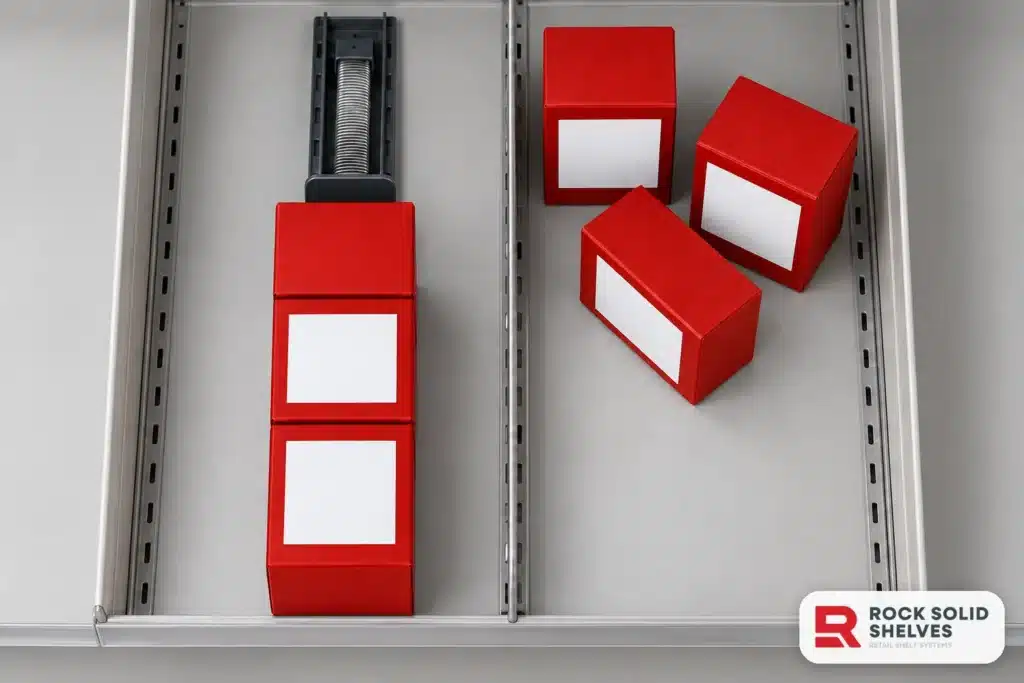
Pushers on flat shelves. A spring-loaded pusher sits behind the row, pushing product forward as units sell. It suits boxed goods, pouches, and small packaged items, the kinds of packaging that slump and drift on a normal shelf.
Gravity feed in coolers. Bottles, cans, cartons, and upright bags do better on a sloped gravity-feed shelf, where the next unit rolls or slides forward on its own. That’s the standard fix inside beverage and dairy coolers.
Dividers everywhere. Half of what looks like a facing problem is sideways drift, not backward drift. Lane dividers keep each product in its own channel and ensure pushers and gravity feed work properly.
None of this removes the need to restock. It removes the need to keep straightening what’s already there.
What stays manual, and should
Self-facing shelves take away the repetitive part. A few jobs still belong to people, and doing them well is where staff time should go.
- Zoning at the end of the day. A quick pass to catch anything out of place, so the store opens clean.
- Restocking. Loading new product from the back, in date order.
- Date checks, especially on short-dated categories like dairy and prepared food.
- Price tags and shelf labels. Making sure the right price sits under the right product after a reset.
That’s a far better use of an hour than pulling the same boxes forward for the third time since lunch.
The short version
Facing means pulling the product to the front edge, with the labels facing out. It matters because shoppers only see the front row, and a gap there looks like an empty shelf.
It never stays done because every customer disturbs the row, and busy stores see well over a thousand transactions a day. Done by hand, it’s a small cost repeated all day, every day.
Make the shelves do it instead. Use pushers for boxed and small-packaged goods on flat shelves, gravity-feed for bottles and cans in coolers, and dividers to prevent sideways drift. Then spend staff time on the jobs that genuinely need people: zoning, restocking, and date checks.
Frequently asked questions
What is a shelf facing?
A shelf facing is one unit of a product showing at the front of the shelf. A product with three facings shows three units side by side. “Facing” is also the name for the task of pulling products forward to the front edge.
What does facing mean in retail?
In retail, facing means pulling products to the front edge of the shelf and turning labels toward the shopper, so the shelf looks full and easy to shop. Many stores also call it fronting.
What’s the difference between facing and zoning?
Facing is the process of pulling product forward, usually one shelf or lane at a time, throughout the day. Zoning is a fuller tidy of a whole section or aisle, usually at the end of the day, covering facing, straightening, and putting misplaced items back.
How many facings should a product have?
Enough that it doesn’t look sold out between restocks. Fast sellers usually need two or more facings, and slow sellers can often manage with one. If a product regularly shows a gap before restocking, give it another facing rather than more depth.
How often should shelves be faced?
It depends on traffic. Busy convenience stores often face key sections several times a day and zone the whole store at closing. Self-facing shelves with pushers or gravity feed cut that down to a quick end-of-day zone.